
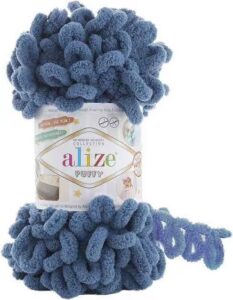
For a looped yarn sample request, send a reference set that separates the category image, the supplier proposed item and each physical sample variation. Ask which exact item the supplier can offer and how it relates to the reference picture. Keep alternatives separately identified. A category photograph can describe the appearance being discussed without proving composition, brand relationships, availability or an exact match to the eventual sample.
State what the category image does and does not identify
The current Yaying Yarn homepage uses a blue looped-yarn image for its Fancy Yarn category. The image retains its printed product marking. In an enquiry, use it to explain the visible appearance of interest, not to claim that the site owns or manufactures the pictured brand. The category card does not independently establish an offered item code, a fibre declaration or an available supply arrangement.
Attach the original reference to the enquiry and ask the supplier to identify a specific offered item. If it proposes a visually similar alternative, keep that alternative separate from the original reference. This avoids changing the requested identity without a record. The supplier should be able to answer which aspects of the reference it can address and which aspects belong to a different or unavailable item.
Build a small set of linked reference records
Use separate identifiers for the visual reference, the supplier offer and the physical sample. Link them in a simple table rather than using one product name for every stage. The visual reference describes the enquiry. The offer identifies what the supplier proposes. The physical sample identifies what was actually received and reviewed. These may be related, but they should not be assumed identical before confirmation.
Ask for an overall sample view and the additional view needed to understand the visible yarn structure. A category thumbnail has a limited visual scope and cannot supply detailed measurements. Keep the sample band and any supplier identifier associated with the same sample. If several variations are sent together, require a clear way to distinguish them before recording appearance observations.
Reference record | Purpose | Confirmation question
Category image ID | Explains the appearance used in the enquiry | Which aspects can the supplier address?
Offered item ID | Names the actual proposed supply | Is it the same item or an alternative?
Physical sample ID | Identifies the item received for review | Which offer and variation does it represent?
Appearance record | Keeps dated observations of the sample | What remains to be clarified?
Revision reference | Tracks a later change or substitution | Which earlier record does it replace?
Describe observable structure without guessing ingredients
Describe only what the selected sample views actually show. For this category reference, the visible loops are a useful starting point for a structure question. Ask the supplier how it identifies the proposed construction and which sample demonstrates it. Do not derive fibre percentages, softness, wash behavior or performance from the looped appearance. Those matters require separate item-specific statements and evidence where relevant.
If dimensions or other construction details matter to the enquiry, ask the supplier to define the relevant points and method. Keep requested requirements separate from observed sample readings. A small category image is not a measurement record, and it should not become one through an estimated conversion. The sample file can remain useful while some technical details are still awaiting clarification.
Keep variations and substitutions visible
Record each proposed variation under its own sample identifier, with the supplier description kept intact. Ask whether a change affects only the appearance reference or represents another offered item. Do not assume that a familiar printed name, similar color or similar package confirms the same composition or construction. The purpose is to make a substitution understandable before the buyer decides whether to review it.
When the buyer compares samples, retain the reference used and the observations made against it. If an alternative is accepted for further discussion, state which alternative and which aspects were reviewed. Do not describe that decision as confirming unexamined attributes. A clear appearance comparison can support an enquiry without becoming a general promise about every item in a category.
• Separate the category illustration from the actual offered item.
• Assign distinct identifiers to received samples and alternatives.
• Record observable structure without inferring ingredients or performance.
• Keep acceptance scope and unanswered questions visible in revisions.
Send a precise supplier follow-up
Send the reference table and sample observations through the official contact channel. Ask the supplier to correct the item mapping and identify any limitations before preparing a quotation around the sample. Keep the pictured marking unaltered in the reference file, while avoiding unsupported statements about brand ownership, authorization or an existing manufacturer relationship. The record should explain the enquiry without inventing those relationships.
Before relying on a final offer, confirm the sample identity and the separate composition, quantity and commercial fields that the buyer actually requires. Retain earlier alternatives so the discussion can be followed later. The result should be a traceable reference set: the team can see which image prompted the request, what the supplier proposed, what sample was reviewed and what still needs confirmation.
Frequently asked questions
Does the category photograph confirm a particular branded offer?
No. It is a visual enquiry reference. Ask the supplier to identify the exact proposed item and clarify its relationship to the reference without assuming ownership or authorization.
Can a category thumbnail establish yarn dimensions or composition?
No. Request an identifiable sample and applicable supplier information. Keep image observations separate from measurements and ingredient declarations.
How should a visually similar replacement be recorded?
Give it a separate offered-item and sample reference. Retain the original enquiry and describe which aspects of the alternative were reviewed before accepting any substitution.
Product and contact references
Catalogue reference: confirm matching item: https://yayingyarn.com/products/?product_filter=%e8%8a%b1%e5%bc%8f%e7%ba%b1%e7%ba%bf
Related catalogue reference: https://yayingyarn.com/product/4-ply-milk-cotton/
Contact Yaying Yarn: https://yayingyarn.com/contact/
Yaying Yarn blog: https://yayingyarn.com/blog/